Managed IT operates
- Users
- Endpoints
- Infrastructure
- Applications
- Security events
- Tickets
Managed Intelligence
Copilot, agents, automation, and organizational knowledge are becoming part of how work gets done. Centered Networks brings the Microsoft foundation, AI adoption, agent development, governance, security, cost, and continuous improvement into one managed operating model.
Where Managed Intelligence enters
A capacity problem may lead to an agent. A reporting problem may lead to Fabric and governed data. An access problem may lead to Copilot or a knowledge experience. A resilience problem may lead to security and governance work. The technology can differ. The operating requirement does not: identity, data access, security, ownership, cost, measurement, and lifecycle still have to work together.
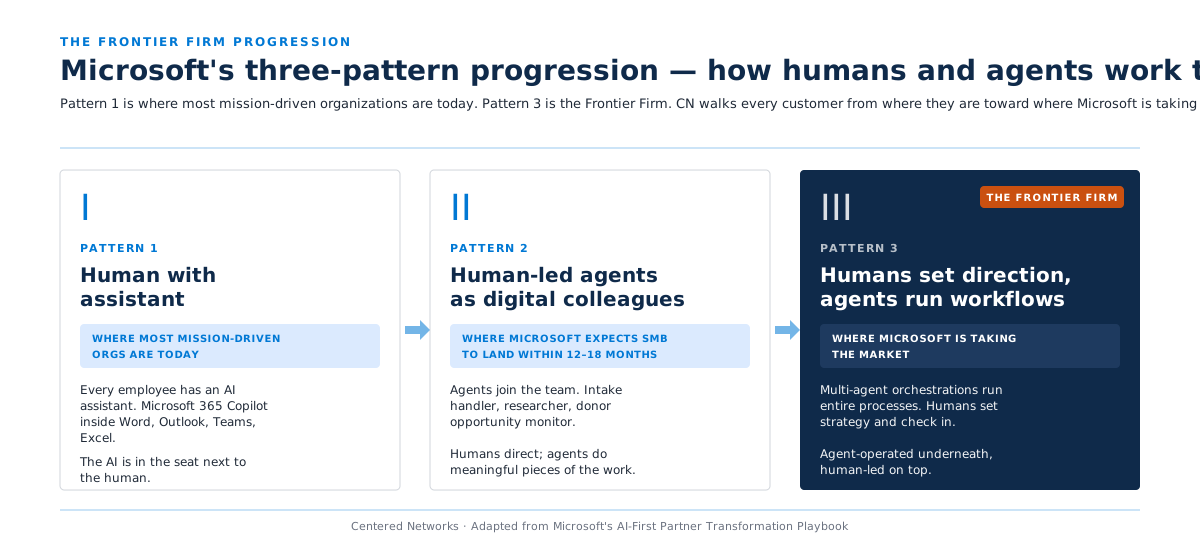
Managed Intelligence is the continuous operation of the systems that let people and AI work together safely and productively. It starts below the AI layer: with identity, devices, permissions, data, and security. It extends into Microsoft 365 Copilot and production agents. And it continues after launch through monitoring, lifecycle management, cost controls, adoption, measurement, and optimization.
One operating model
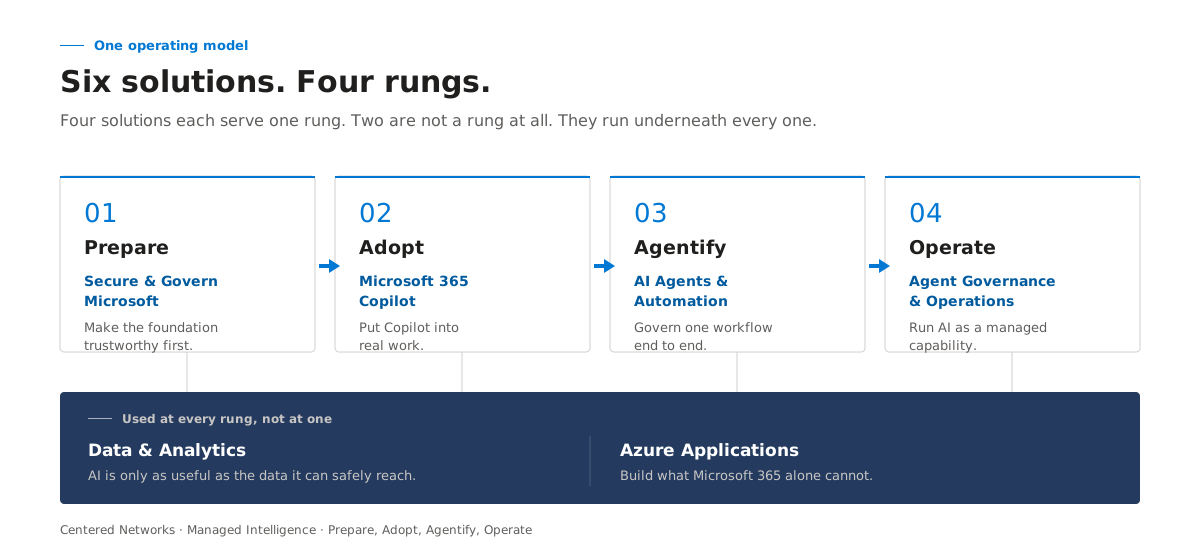
01 Prepare
AI inherits the permissions, data quality, identity controls, device posture, and information architecture that already exist. We secure and govern the Microsoft environment before those conditions are amplified by AI.
Secure & Govern Microsoft02 Adopt
A license does not create adoption. We identify where Copilot can materially improve work, prepare users and data, deploy the right controls, establish enablement, and measure whether usage is translating into value.
Microsoft 365 Copilot03 Agentify
We identify processes where an agent or automation can perform meaningful work, then build the solution around approved data, tools, and systems with appropriate human checkpoints.
AI Agents & Automation04 Operate
Production AI changes. Models change. Permissions change. People leave. Workflows evolve. Costs move. Agents accumulate. Managed Intelligence gives the environment an operating discipline after deployment.
Agent Governance & OperationsThe next operating layer
Managed services remain the foundation: endpoints need protection, identities need control, systems need to stay available, and users still need support. What changes in the AI era is the object being managed.
Managed IT operates
Managed Intelligence operates
Centered Networks combines both layers so your AI strategy is not disconnected from the Microsoft environment it depends on. For the longer argument about where the managed-services category is heading, read the MIP position paper.
What gets managed
Know what AI, agents, automations, and tools are actually in use.
Give every production agent a clear owner, identity, permission boundary, and purpose.
Define what can be built, what data can be used, what actions are allowed, and where human approval is required.
Monitor whether agents and copilots are being used, completing work, and improving over time.
Track consumption and spend, assign ownership, and connect AI cost to business value.
Expand what works. Fix what drifts. Consolidate duplication. Retire what no longer earns its place.
Centered Networks anchors Managed Intelligence in Microsoft because the platform already connects identity, productivity, data, security, automation, and cloud infrastructure. The goal is not to force every use case into one product. It is to reduce unnecessary seams between the systems that know who a user is, what data they can access, what an agent can do, and how the work is governed.
Who it is for
You do not need an army of AI specialists. You also cannot treat AI like an unmanaged collection of personal tools. Centered Networks is built for organizations that need enterprise-grade discipline with a delivery model that fits a leaner team, especially nonprofits, foundations and grantmakers, and rural healthcare.
More capacity for the mission with governance intact.
AI & Microsoft for nonprofitsStewardship-first AI a board can understand.
AI & Microsoft for foundationsSecure modernization with carefully governed AI.
AI & Microsoft for rural healthcareYour first step might be Microsoft 365 readiness. It might be Copilot adoption. It might be a production agent. It might be bringing an existing fleet under control. The 90-Day AI Roadmap identifies the highest-value next move and the dependencies that have to be handled first.
Delivered through a focused, paid Centered Networks Discovery Sprint. No requirement to continue beyond the roadmap.